

Description
Master Building Acoustics & Noise Control – Complete Acoustic Consultancy Training
Requirements
-
Basic understanding of high school mathematics and physics is helpful but not essential.
-
A passion for engineering, architecture, or construction design will make learning more engaging.
Course Description
Welcome to the Complete Building Acoustics & Noise Control Course — your professional gateway to becoming an acoustic consultant or a sound design expert in the engineering and construction industry.
This course is designed for students, engineers, architects, and construction professionals who want to build strong foundational knowledge in building acoustics, sound insulation, room acoustics, and environmental noise control.
Whether you’re a university student exploring career options or an experienced professional transitioning into acoustic consultancy, this program provides all the essential knowledge you need to understand and design sound-optimized spaces.
Through real-world examples, spreadsheet-based calculations, and auralisation demonstrations, you’ll gain practical skills in acoustic design and analysis. Example spreadsheets are also included for download to reinforce your learning.
By the end of this course, you’ll have the technical foundation and industry insight to qualify for entry-level acoustic consultant positions in the engineering, construction, or architecture sectors.
What You’ll Learn
-
Fundamental principles of sound and acoustics
-
How sound behaves outdoors and indoors
-
Design techniques for sound insulation and noise reduction
-
Understanding impact noise and how to control it in buildings
-
Integrating acoustics into sustainable design
-
Use of 3D modeling and acoustic simulation software
-
Applying acoustics knowledge to real-world building projects
Detailed Course Content
Module 1: Acoustic Fundamentals
-
Understanding what sound is
-
Decibel arithmetic and sound measurement
-
Describing and analyzing sound sources
-
Acoustic properties and sound absorption of materials
-
Practical exercises using example spreadsheets
Module 2: Sound Propagation Outdoors
-
Factors affecting direct sound levels
-
Influence of distance, source size, and directionality
-
Sound barriers and environmental screening
-
Calculating outdoor sound levels
-
Outdoor noise control criteria and standards
Module 3: Room Acoustics
-
Sound propagation within rooms and enclosed spaces
-
Types of surfaces and their acoustic impact
-
Reverberation time and sound level calculations
-
Room acoustic modeling techniques
-
Introduction to 3D acoustic modeling software
-
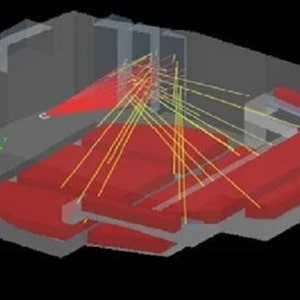
Hands-on auralisation examples (e.g., Beijing Watercube)
Module 4: Sound Insulation
-
Difference between sound absorption and sound insulation
-
Airborne vs. structure-borne sound transmission
-
Sound insulation parameters and performance metrics
-
Partitions, glazing, and composite wall design
-
Sound-insulating constructions and real-world case studies
-
Auralisations to compare sound insulation performance
Module 5: Impact Noise
-
How impact noise travels through buildings
-
Measurement and analysis of impact noise levels
-
Floor system design for noise control
-
Reduction methods and performance improvements
-
Case study: Acoustic design for a residential apartment
Module 6: Acoustics for Sustainable Design
-
Acoustic considerations in eco-friendly building design
-
Green building rating systems and acoustic comfort
-
Designing for open-plan offices and meeting rooms
-
Natural ventilation and noise management
-
Dual-vented window design and acoustic performance
-
Using recycled materials for acoustic purposes
-
Integrating daylighting with acoustic design principles
Who This Course Is For
-
University and advanced high school students exploring acoustics or building design
-
Mature learners interested in acoustics and noise control
-
Engineering, architecture, and construction professionals seeking specialized acoustic knowledge
-
University graduates preparing for acoustic consultancy careers
-
Educators or course coordinators developing academic content in acoustics and noise management
Bonus Learning Path
If you’re completely new to acoustics, consider starting with “Acoustics for Beginners” — a perfect introduction before advancing to this professional-level course.
You may also explore our related course on “HVAC and Noise Control” to expand your understanding of mechanical systems and building acoustics integration.
Please Note: Files will be included in this purchase only Full Course Video & Course Resources. You will get cloud storage download link with life time download access.




Reviews
There are no reviews yet.